In the ever-turbulent world of finance, the Dow Jones Industrial Average stands as a barometer of economic health. Picture it as the stock market’s roller coaster—thrilling highs and gut-wrenching lows that keep investors on the edge of their seats. Whether it’s soaring to record heights or taking a nosedive, understanding the latest Dow Jones updates is crucial for anyone navigating the investment landscape.
Investors and market enthusiasts alike are glued to their screens, watching for those crucial updates that can make or break portfolios. From corporate earnings to geopolitical events, the Dow is influenced by a myriad of factors that can turn a sunny day into a stormy one faster than you can say “bull market.” Buckle up as we dive into the latest trends, insights, and what they mean for your financial future.
Overview of Dow Jones Updates
The Dow Jones Industrial Average (DJIA) serves as a crucial barometer for the stock market. Recent updates reflect ongoing trends driven by both corporate earnings reports and macroeconomic indicators. Investors closely monitor these fluctuations to gauge market sentiment.
Current fluctuations in the Dow often respond to geopolitical events, interest rate changes, and inflation concerns. Each factor can trigger significant shifts, impacting overall investment strategies. For instance, rising corporate profits may contribute to slight increases, while adverse news can lead to downturns.
Market analysts predict continued volatility in response to upcoming Federal Reserve meetings. Following the last meeting, many investors remained cautious as they reconsidered their portfolio allocations. This cautious approach stems from uncertainty surrounding interest rates and inflation expectations.
Beyond earnings and geopolitical events, sector performance plays an essential role in Dow updates. Technology stocks, for instance, often exhibit sharper movements compared to more stable sectors like utilities. Tracking these individual performances provides a deeper insight into the indexes’ overall health and direction.
Investors should stay informed through reliable financial news platforms to catch the latest developments. Consistently updating knowledge enables better decision-making, allowing for timely reactions to market changes. As new data emerges, understanding its context within broader economic trends becomes vital.
Key Highlights from Recent Dow Jones Updates
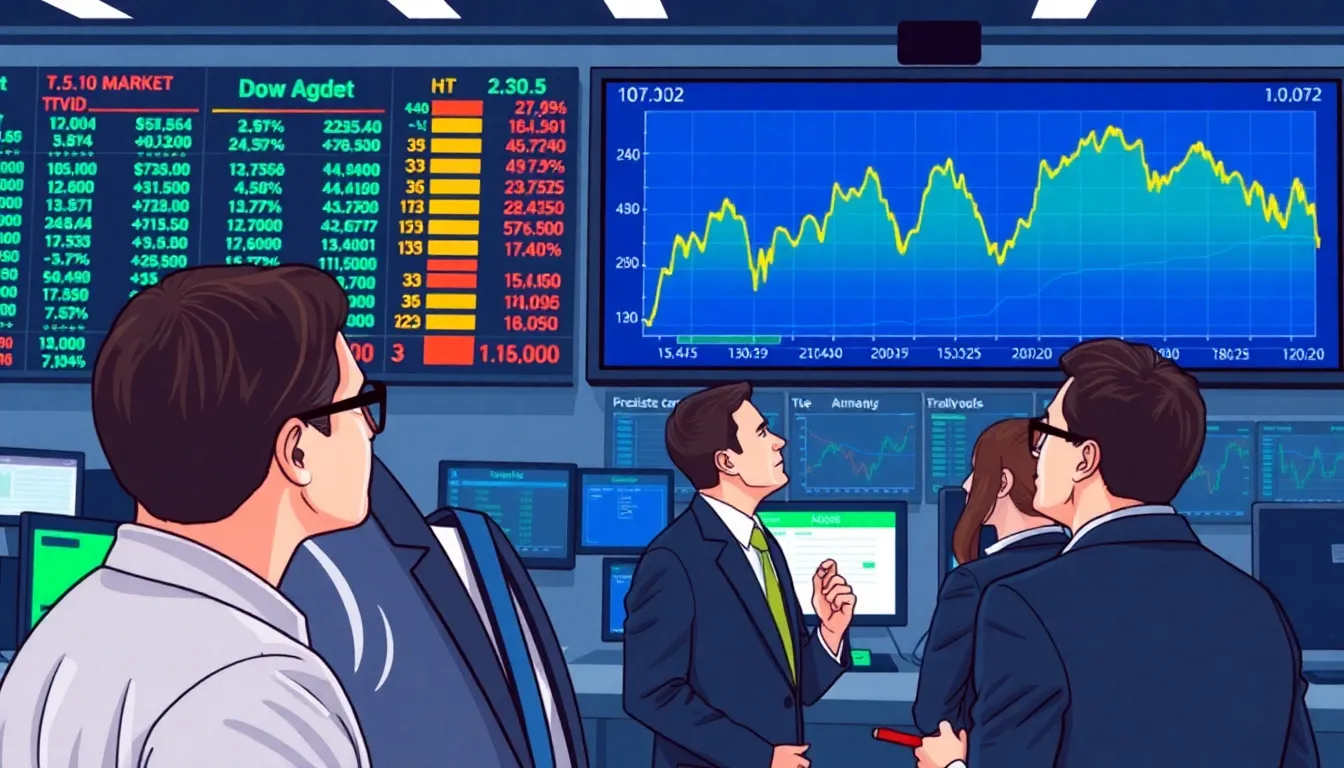
Recent movements in the Dow Jones Industrial Average reflect broader market dynamics influenced by pressing economic conditions. Understanding these highlights can provide valuable insights for investors.
Market Trends
Fluctuations in the Dow stem from investor sentiment and sector performance. Technology stocks tend to show sharper gains and losses, drawing significant attention. Recent earnings reports from major tech companies contributed to noticeable shifts, indicating their impact on market trends. The healthcare and financial sectors also play crucial roles, often demonstrating steadier movements. Analysts observe ongoing volatility, correlating with global economic uncertainties. Traders remain cautious, adjusting strategies in response to these trends.
Economic Indicators
Key economic indicators drive decisions in the financial market, especially with regards to the Dow. Inflation rates significantly affect investor behavior and market confidence. Recent reports showing higher than expected inflation fueled concerns over Federal Reserve interest rate hikes. Employment data also influences the Dow’s direction. Improved job numbers often correlate with bullish market behavior, while sluggish data can prompt declines. Investors closely scrutinize upcoming economic data releases, as these can shift market perspectives quickly. Monitoring these indicators remains essential for effective investment strategy formulation.
Impact on Investors
Monitoring the Dow Jones updates significantly impacts investor behavior and decision-making processes. Factors such as recent earnings and economic conditions can alter strategies and expectations swiftly.
Strategies for Investment
Adopting a multifaceted investment strategy proves beneficial amid Dow fluctuations. Investors often focus on diversifying their portfolios to mitigate risks. Seeking sectors with strong potential, like technology and healthcare, can yield favorable returns. Regularly assessing economic indicators helps refine investment choices. Staying informed about geopolitical developments also enables timely adjustments in investment strategies.
Risk Management
Implementing effective risk management strategies is essential for navigating market volatility. Setting stop-loss orders can protect investments from unexpected downturns. Maintaining a balance between high-risk and stable assets aids in preserving portfolio integrity. Investors might consider stress-testing their portfolios against adverse market scenarios. Evaluating individual risk tolerance ensures alignment with investment goals, particularly during uncertain economic times.
Future Predictions for Dow Jones
Market analysts anticipate ongoing fluctuations in the Dow Jones Industrial Average due to various economic factors. Interest rate adjustments by the Federal Reserve often trigger significant shifts in market behavior. Predictions suggest heightened volatility in the near term, especially surrounding upcoming Federal Reserve meetings. Increased scrutiny on inflation rates contributes to cautious investor sentiment.
Recent earnings reports from major corporations play a crucial role in shaping expectations. Improved job numbers correlate with bullish market trends, influencing investor confidence. Sector performance varies, with technology stocks frequently exhibiting more pronounced movements compared to stable sectors such as utilities. Analysts highlight that recent earnings often dictate short-term market direction.
Investors increasingly focus on macroeconomic indicators to inform their strategies. Reacting to global economic uncertainties, traders adjust their portfolios accordingly. Effective risk management strategies, including setting stop-loss orders, become critical in navigating this environment. Diversifying across sectors, such as technology and healthcare, helps mitigate risks during turbulent periods.
Future projections emphasize that the Dow’s performance will likely respond to external factors, including geopolitical events. Traders must stay vigilant regarding market trends and sector-specific developments. Analysts recommend maintaining a balanced approach, incorporating both growth and stability into investment strategies. Monitoring economic indicators remains vital for aligning with investment objectives in a fluctuating market.
The Dow Jones Industrial Average remains a vital barometer for investors navigating the complexities of the financial landscape. As market dynamics evolve due to corporate earnings and economic indicators, staying informed is essential. The current climate suggests that ongoing volatility will shape investment strategies, emphasizing the importance of diversification and risk management.
Investors must remain vigilant and adaptable, especially with the Federal Reserve’s decisions on interest rates looming. By closely monitoring economic trends and sector performances, they can better position their portfolios for potential shifts. The interplay between global events and market sentiment will continue to influence the Dow, making it crucial for investors to align their strategies with evolving conditions.