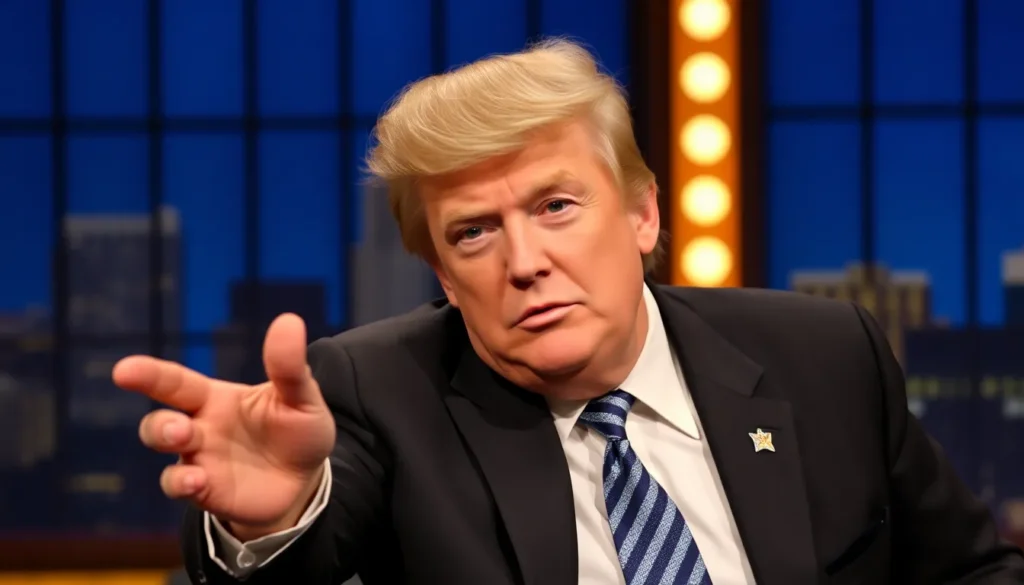
Saturday Night Live has become a cultural phenomenon, especially when it comes to its iconic parodies of political figures. Among these, the portrayal of Donald Trump stands out like a bright orange beacon in a sea of serious news. But who’s the mastermind behind this unforgettable impersonation?
Overview of SNL’s Donald Trump Portrayal
Alec Baldwin became the face of Donald Trump on “Saturday Night Live,” delivering a memorable performance that resonated with audiences. Baldwin first portrayed Trump in September 2016, during the show’s 42nd season. His interpretation focused on Trump’s unique speech patterns, mannerisms, and signature phrases.
Highlighting Baldwin’s comedic timing, critics praised his ability to capture the former president’s essence. Through exaggerated gestures and facial expressions, Baldwin created a caricature that both amused and provoked thoughtful commentary. This portrayal contributed significantly to SNL’s ongoing tradition of political satire.
Viewership statistics underscore Baldwin’s impact on the show. Episodes featuring his impersonation often garnered higher ratings, engaging audiences looking for a humorous take on current events. Fans appreciated his willingness to tackle relevant topics while maintaining a light-hearted approach.
Attention to detail marked Baldwin’s performance. Costuming and makeup transformed him into a recognizable version of Trump, enhancing the overall effect. Additionally, his interactions with other cast members provided memorable moments, leading to iconic sketches that highlighted Trump’s policies and controversies.
Viewer reactions reflected a wide range of opinions. Supporters enjoyed the humor, while critics often debated the effectiveness and fairness of the portrayal. Irrespective of opinions, Baldwin’s impersonation undoubtedly became a cultural touchstone.
Baldwin’s portrayal of Donald Trump on SNL helped shape public perception, merging entertainment with political commentary. His performance remains a cornerstone of the show’s political sketches, influencing future comedic interpretations of political figures.
Key Actors Behind the Role
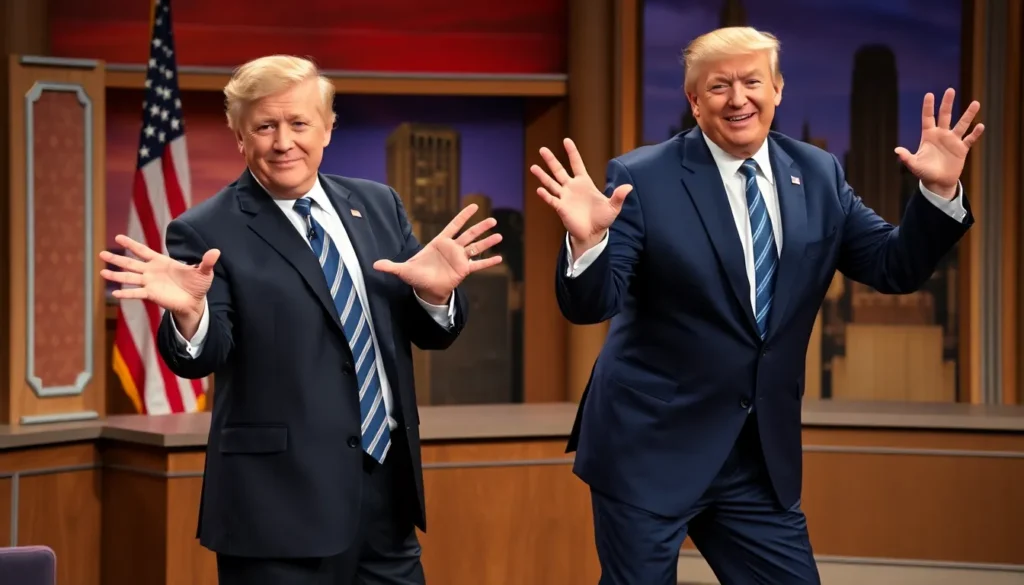
“Saturday Night Live” showcased two prominent actors in the role of Donald Trump, each leaving a unique mark on the show’s portrayal of the former president.
Alec Baldwin’s Impact
Alec Baldwin brought a distinctive energy to his impersonation of Donald Trump. His debut in September 2016 marked a significant moment in political satire. Audiences embraced Baldwin’s interpretation, especially his knack for mimicking Trump’s speech patterns and gestures. Critics noted how he infused humor into serious political commentary. Notably, Baldwin’s choice of costumes and makeup added visual depth to his portrayal. This attention to detail enhanced the sketch’s authenticity, solidifying his place in “SNL” history. Over time, Baldwin’s performance remained a focal point of discussion, shaping audience perceptions of Trump’s administration and its policies.
Current Portrayal by James Austin Johnson
James Austin Johnson took over the role of Donald Trump in the 47th season of “Saturday Night Live.” His portrayal brings a fresh perspective to the character, incorporating current political contexts and Trump’s ongoing influence. Johnson’s take includes a blend of humor and an updated portrayal reflecting the changing political landscape. His performances feature sharp wit and keen observations, resonating with viewers. Notably, Johnson often emphasizes unconventional aspects of Trump’s personality, offering a distinct comedic angle. The transition from Baldwin to Johnson illustrates “SNL’s” evolution in political satire, showcasing how different actors can reinterpret the same character while addressing relevant themes.
Evolution of the Character
Alec Baldwin’s portrayal of Donald Trump on “Saturday Night Live” marked significant changes in character representation. Initially, Baldwin introduced a blend of humor and mimicry that resonated strongly with audiences. His comedic style thrived on exaggerated expressions and vocal inflections that mirrored Trump’s public persona. As seasons progressed, Baldwin’s performance evolved to reflect current events, focusing on topical issues surrounding Trump’s policies and controversies.
James Austin Johnson’s entrance in the 47th season brought fresh dynamics to the character. Emphasizing wit, Johnson’s interpretations included unorthodox elements of Trump’s personality, distinguishing his take from Baldwin’s. The contrasting styles of these two actors showcase “SNL’s” adaptability in presenting political satire while responding to an evolving political landscape.
Changes Over the Years
Impersonations of Trump have transformed considerably since Baldwin first donned the role. Baldwin’s original sketches illustrated hyperbolic elements, emphasizing Trump’s infamous quotes and antics. Over time, Johnson adapted the character, highlighting Trump’s evolving political strategies and public responses. This adjustment ensured sketches resonated with contemporary viewers. Johnson incorporated modern issues, making his portrayal relatable and timely. Through these shifts, the audience witnessed an impressive range of comedic interpretations that kept the sketches fresh and engaging.
Audience Reception
Audience reactions have varied between Baldwin’s and Johnson’s portrayals. Baldwin’s performances initially drew enthusiastic responses, with many praising his ability to encapsulate Trump’s mannerisms and speech patterns. Ratings for episodes featuring Baldwin often peaked, reflecting his impact on viewer engagement. In contrast, Johnson’s take received appreciation for its sharper satire and relevant humor. Although some felt attached to Baldwin’s style, Johnson’s fresh approach fostered new discussions around Trump’s influence and legacy. These contrasting receptions underscore how “SNL” continually shapes political commentary through its evolving portrayals.
SNL’s Influence on Political Satire
“Saturday Night Live” plays a significant role in shaping political satire. Its comedy through political impersonations often reflects current events and societal issues. Alec Baldwin’s portrayal of Donald Trump set a high standard, engaging audiences with a blend of humor and sharp commentary. Critics frequently noted his ability to capture Trump’s distinctive mannerisms, making his impersonation a central aspect of SNL’s political sketches.
Viewership data supports Baldwin’s impact. Episodes featuring his sketches frequently achieved higher ratings compared to those without his character. This increased popularity indicates the audience’s appetite for political humor that resonates with real-world events. Baldwin’s detailed costuming and commitment to authenticity contributed to the widespread appeal of his performances.
In contrast, James Austin Johnson’s take on Trump presents a fresh angle, showcasing a different style of political satire. His focus on unconventional traits mirrors the evolving political landscape and highlights current issues. Johnson’s sharp, witty observations connect well with viewers, reflecting a shift in the show’s narrative approach.
The transition from Baldwin to Johnson emphasizes SNL’s adaptability. Each actor brings unique interpretations to the same character, demonstrating how political satire evolves over time. Baldwin’s initial exaggerated expressions paved the way for Johnson’s more relatable and topical humor. Audience reactions have shifted as well, with Johnson’s satire sparking discussions about Trump’s influence and legacy.
SNL remains a vital force in political commentary. Its ability to reinvent characters while addressing relevant themes shapes public perceptions of political figures and issues. As such, the show continues to influence how society engages with political satire.
The journey of Donald Trump’s portrayal on “Saturday Night Live” highlights the show’s pivotal role in political satire. Alec Baldwin’s initial impersonation captivated audiences with its humor and sharp commentary, setting a high bar for political sketches. As James Austin Johnson took over, he brought a fresh perspective that resonated with contemporary viewers. This evolution underscores SNL’s adaptability in addressing the ever-changing political landscape.
Both actors have contributed significantly to the public’s perception of Trump, showcasing how comedy can reflect societal issues. SNL continues to be a vital platform for political commentary, ensuring that its sketches remain relevant and engaging. The transition from Baldwin to Johnson exemplifies the show’s commitment to reinventing characters while maintaining a critical eye on current events.